Quick answer: A submersible pump should be protected against dry running, overload, undercurrent, overcurrent, abnormal voltage and phase imbalance. A dedicated pump protection relay can supervise several of these conditions and stop the motor before a fault becomes a costly pump, cable or winding failure.
Submersible pumps often operate where direct inspection is difficult. When a motor is inside a well or water system, a small electrical or hydraulic problem can create significant removal, repair and downtime costs. A reliable control panel therefore needs more than a contactor and a basic overload setting.
Which faults should a pump control panel detect?
Dry running or loss of water
A pump that runs without adequate water can lose cooling and lubrication. Depending on the system, detection may use electrodes, a float, undercurrent measurement or a combination of methods. The correct method depends on the well, liquid and control arrangement.
Overcurrent and overload
Mechanical obstruction, bearing problems, a jammed pump or an electrical fault can increase motor current. Protection must be coordinated with the motor’s rated current and starting behaviour so that it trips for a genuine fault without interrupting every normal start.
Undercurrent
Unexpectedly low motor current can indicate dry running, loss of load or another abnormal operating condition. A relay with adjustable low-current protection can provide a useful second layer of supervision.
High or low voltage
Voltage outside the motor’s permitted range can increase heating, reduce torque or cause unreliable starting. The relay and contactor should remove the motor from service when the measured condition exceeds the configured limits.
Voltage or current asymmetry
Three-phase imbalance can cause excessive motor heating even when average current looks acceptable. A pump protection scheme should consider phase loss and asymmetry where these risks apply.
How a dedicated pump protection relay helps
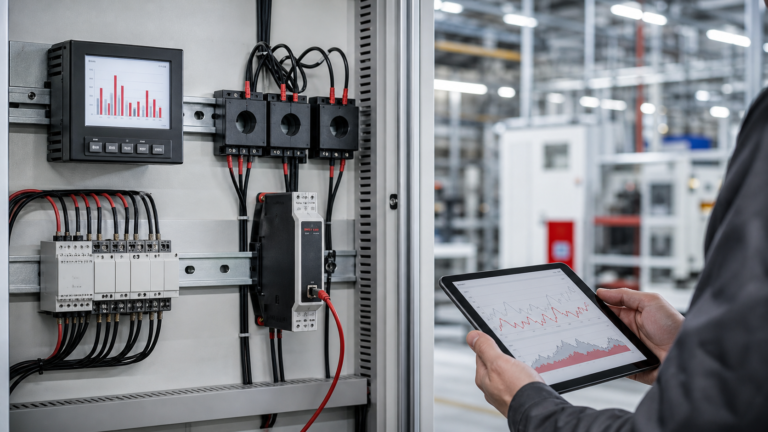
A purpose-built relay combines measurements and timing logic in one panel device. For example, the TENSE TDK-24 is designed for submersible pumps and motors and includes high/low voltage and current protection, voltage/current asymmetry protection, automatic reset timing, electrode or float connectivity and additional pump-focused functions. Its published measurement range is 2 A to 40 A. The TDK-24YU covers a higher published current range and provides star-delta contact output.
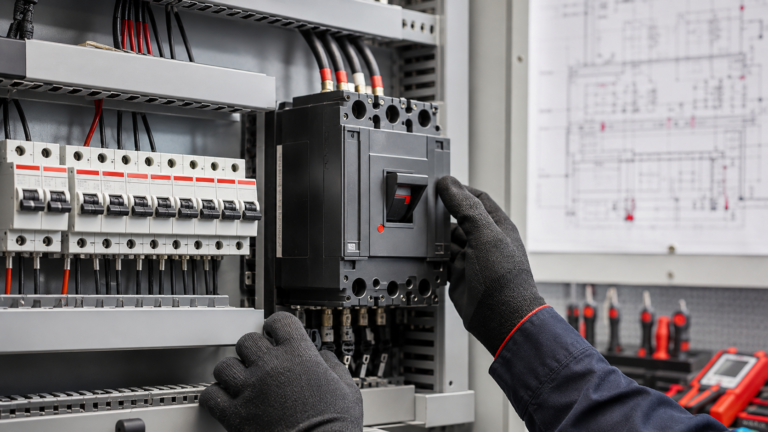
These features do not remove the need for upstream short-circuit protection, a correctly selected contactor, earthing, cable protection and a complete control design. They provide the supervisory layer that identifies operating conditions a basic overload may not detect.
Practical relay selection checklist
- Motor current: confirm that the relay measurement range covers the motor’s normal running current.
- Starting method: direct-on-line and star-delta systems require different output and timing arrangements.
- Supply system: verify voltage, phase configuration and frequency.
- Water sensing: decide whether electrodes, float switches or current-based dry-run detection will be used.
- Reset strategy: use automatic restart only where an unattended restart is safe and permitted.
- Contactor interface: check relay output ratings and the contactor coil/control voltage.
- Environment: account for enclosure protection, heat, moisture, dust and cable entry.
Commissioning steps that should not be skipped
- Record the motor nameplate data and verify the wiring against the approved drawing.
- Check phase sequence, earthing, insulation and protection-device ratings before energising.
- Measure normal starting and running current under realistic hydraulic conditions.
- Set voltage, current, asymmetry and delay values from the motor, pump and relay documentation.
- Test each trip input safely, including the water-level device where fitted.
- Confirm the reset behaviour and make sure an automatic restart cannot endanger personnel.
- Label the final settings and keep the user guide with the panel documentation.
The official TENSE pump relay range includes several current ranges and feature sets. Match the device to the motor and control method instead of selecting only by enclosure appearance.
Local considerations for water systems in Pakistan
Voltage variation, generator changeover, long motor cables and outdoor control locations are common considerations in local pumping projects. The panel design should account for measured site conditions, not only nominal supply values. In Karachi’s heat and dust, enclosure temperature and ventilation can also affect contactors, terminals and electronic relays.
For a focused selection, send INTEKS the motor kW or HP, full-load current, supply voltage, starting method, panel control voltage, water-level method and required quantity.
Frequently asked questions
Can a standard overload relay detect dry running?
A conventional overload primarily responds to excessive current. Dry running may produce low current, so a dedicated low-current or water-level function is often needed.
Should a pump restart automatically after voltage returns?
Only when the risk assessment and operating procedure allow it. An unexpected restart can be hazardous, so the reset method must be chosen deliberately.
Do I still need a circuit breaker and contactor?
Yes. A pump control relay supervises operating conditions; it is part of a coordinated panel that also needs correctly selected switching, short-circuit protection, isolation and earthing.